Being told you need surgery for fibroids, an ovarian cyst, or endometriosis can feel overwhelming. Many women in Chhatrapati Sambhajinagar (Aurangabad) come to us with the same worry: will this mean a large cut, a long hospital stay, and weeks away from family and work? The good news is that modern gynaecological surgery has moved well beyond that, and 3D laparoscopy is one of the biggest reasons why.
This guide explains what the procedure is, how it works, and why so many patients now ask for it by name.
Key takeaways
- Laparoscopy is keyhole surgery done through a few small cuts instead of one large one.
- 3D laparoscopy gives the surgeon true depth perception, so movements are more precise.
- Be patient with her mood changes—she's adjusting both physically and emotionally.
- Your gynaecologist will confirm whether it suits your specific condition.
Considering 3D Laparoscopy for Your Treatment?
Speak with our gynaecology team to understand whether 3D laparoscopy is suitable for your condition and what you can expect from the procedure.
What Is Laparoscopy Surgery?
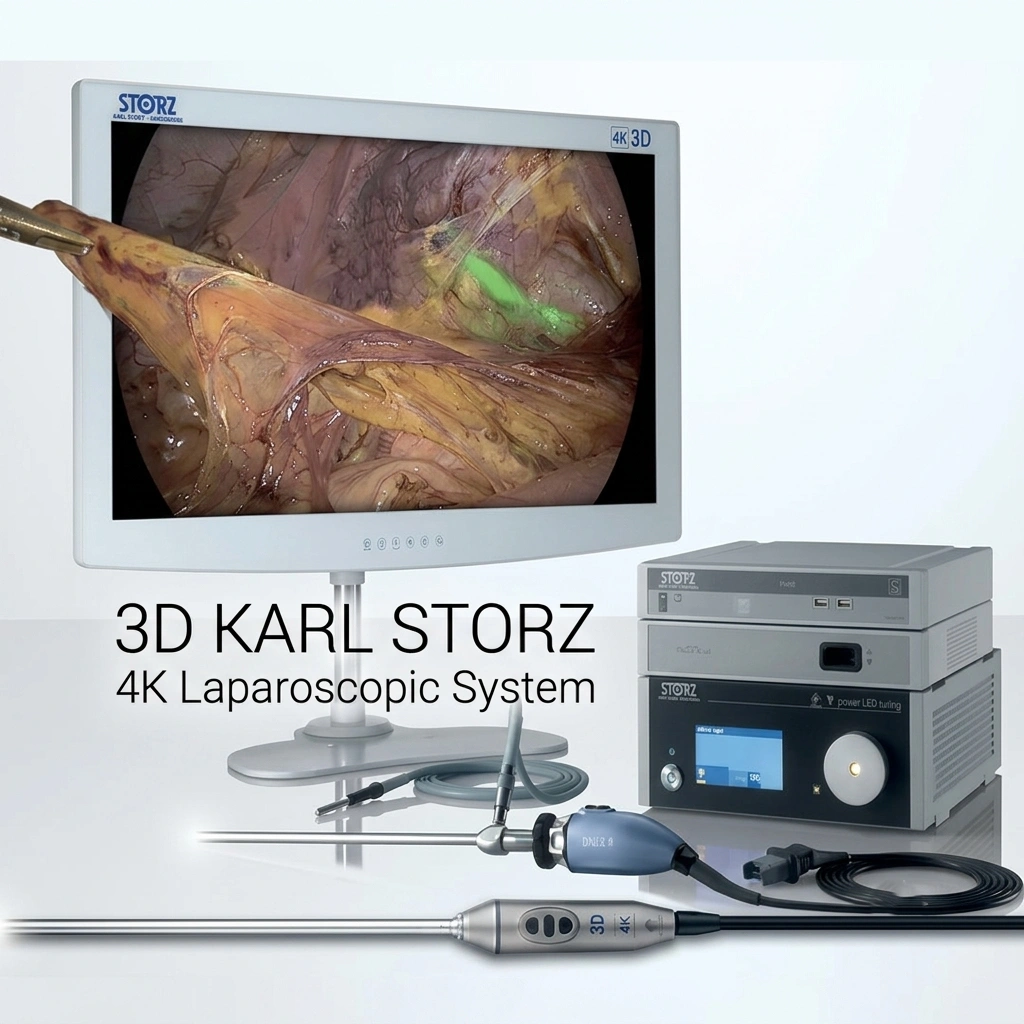
Laparoscopy surgery, also called keyhole or minimally invasive surgery, lets a surgeon treat problems inside the abdomen and pelvis through very small incisions, usually less than a centimetre wide. A thin instrument called a laparoscope, fitted with a light and a camera, is passed through one of these openings. It sends a live view of the internal organs onto a screen.
Compared with open surgery, this approach means far less cutting through muscle and tissue. For gynaecological conditions such as fibroids, ovarian cysts, and endometriosis, it has become the preferred method at most well-equipped hospitals. Our laparoscopic clinic in Aurangabad handles these conditions with a dedicated minimally invasive team.
How 3D Laparoscopy Is Different
Standard laparoscopy shows the surgical field in two dimensions, like watching a flat photograph. Judging exactly how far apart two structures sit takes years of practice.
3D laparoscopy changes that. Using a special camera and 3D glasses, the surgeon sees inside the body with real depth, much closer to how the eye naturally works. This makes fine tasks, such as stitching or working near delicate structures, safer and more accurate.
Think of it as the difference between watching a match on an old flat screen and seeing it with full depth from the front row.
Have Questions About 3D Laparoscopy or Recovery?
Chat with the Anandi Hospitals team on WhatsApp to discuss your concerns, treatment options or appointment requirements.
3D Laparoscopy Advantages
The 3D laparoscopy advantages that matter most to patients include:
- Greater precision: depth perception helps the surgeon avoid nearby organs and blood vessels.
- Smaller scars: a few tiny cuts instead of one long incision.
- Less pain after surgery: smaller wounds usually mean a gentler recovery.
- Shorter hospital stay: many patients go home within a day or two.
- Faster return to routine: back to light daily activities in less time.
- Lower infection risk: smaller openings give bacteria less to work with.
For complex cases, that added accuracy can be the difference between a smooth operation and a complicated one.
When a Gynecologist May Recommend Laparoscopy Surgery
Your doctor considers your symptoms, scans, and overall health before suggesting any procedure. A gynaecologist laparoscopy surgery plan is often recommended for:
- Removing uterine fibroids through myomectomy or fibroid removal
- Treating ovarian cysts
- Diagnosing and managing endometriosis
- Total laparoscopic hysterectomy, when the uterus needs to be removed
- Investigating unexplained pelvic pain or infertility
You can meet our laparoscopy surgeon in Aurangabad to understand which conditions we treat this way. The right choice always depends on your individual case, which is why an in-person consultation matters.
What Recovery Usually Looks Like
Most women are surprised by how manageable recovery feels. Mild soreness around the small incisions is normal for a few days and settles with simple pain relief. Light walking is encouraged early, since it supports healing. Your surgeon will share clear instructions on rest, diet, and when you can resume work, driving, and exercise.
Every body heals at its own pace, so follow-up visits are part of the plan rather than an afterthought.
Talk to a Gynecologist in Aurangabad
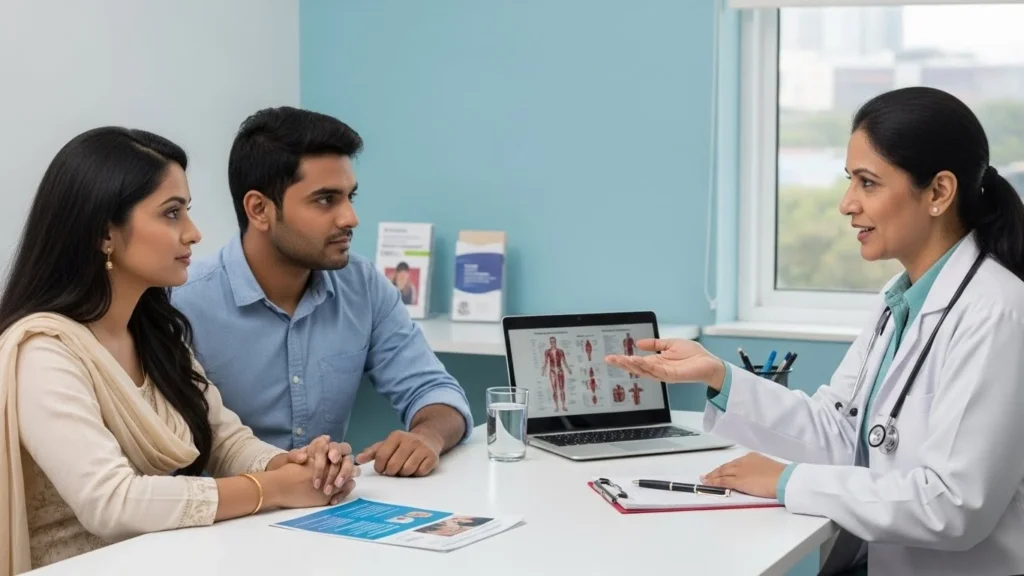
If you have been advised surgery, a second opinion from an experienced laparoscopic team can bring real peace of mind. Whether you are in Aurangabad (Chhatrapati Sambhajinagar) or travelling in from a nearby district, our gynaecologists at Anandi Hospitals will walk you through your options in plain language and answer every question.
Ready to discuss your treatment? Book an appointment with Anandi Hospitals and take the first step toward confident, well-informed care.
Frequently Asked Questions (FAQs)
1. What is the difference between 3D laparoscopy and standard laparoscopy?
Standard laparoscopy shows the surgical field in two dimensions, like a flat photograph, so the surgeon judges depth from experience. 3D laparoscopy uses a special camera and 3D glasses to give real depth perception, much closer to natural vision. This makes fine tasks such as stitching or working near delicate structures more precise.
2. What are the main advantages of 3D laparoscopy for patients?
The benefits patients notice most are greater surgical precision, smaller scars, less pain after surgery, a shorter hospital stay, and a faster return to daily routine. Smaller incisions also lower the risk of infection. For complex cases, the added accuracy can make the operation smoother.
3. Which conditions can be treated with laparoscopic surgery?
Gynaecologists often use laparoscopy to remove uterine fibroids, treat ovarian cysts, diagnose and manage endometriosis, and perform a hysterectomy when the uterus needs to be removed. It is also used to investigate unexplained pelvic pain or infertility. Your gynaecologist will confirm whether it suits your specific condition.
4. How long does recovery take after laparoscopic surgery?
Most women recover faster than with open surgery. Mild soreness around the small incisions is normal for a few days and settles with simple pain relief, and light walking is encouraged early to support healing. Many patients go home within a day or two, though every body heals at its own pace and your surgeon will guide you on returning to work and exercise.
5. Is 3D laparoscopy safe?
For suitable patients, laparoscopy is a well-established, minimally invasive approach, and the depth perception in 3D laparoscopy helps the surgeon avoid nearby organs and blood vessels. As with any surgery, the right choice depends on your individual case, which is why an in-person consultation and pre-operative assessment matter.