When you are expecting, you plan for the delivery room, not the intensive care unit. Yet some babies arrive early, arrive small, or need a little extra help breathing in their first hours. That is what a neonatal intensive care unit is built for. If you have started searching for a NICU hospital near me or a NICU hospital in Chhatrapati Sambhajinagar (Aurangabad), you are already doing the most useful thing a parent can do: preparing before you need it.
Choosing the right NICU hospital is not about picking the fanciest building. It is about knowing what to look for, what to ask, and which details genuinely affect your baby’s care. This checklist walks you through it.
What a NICU does and when your baby might need one
A NICU is a specialised ward for newborns who need close monitoring. Babies may be admitted because they were born premature, had a low birth weight, developed jaundice, had trouble feeding, or faced complications during a high-risk pregnancy. Many stays are short. Some are longer. In every case, the unit exists to give fragile newborns steady, expert attention around the clock.
You will not always know in advance whether your baby will need a NICU. That is exactly why thoughtful parents look at neonatal care while choosing where to deliver, rather than after.
Planning Your Delivery and Want to Know More About NICU Care?
Speak with the Anandi Hospitals team to learn about our NICU facilities, neonatal support and care for premature or high-risk newborns.
Check the level of neonatal care first
Not every NICU offers the same intensity of care. A basic nursery handles healthy newborns and minor observation. A higher level unit supports premature babies who need help with breathing and feeding. The most advanced units manage very small or very sick infants, including those who need ventilator support.
Ask the hospital directly which level of neonatal care they provide. A maternity hospital that runs its own NICU under one roof, rather than transferring babies elsewhere, keeps mother and baby together during a stressful time.
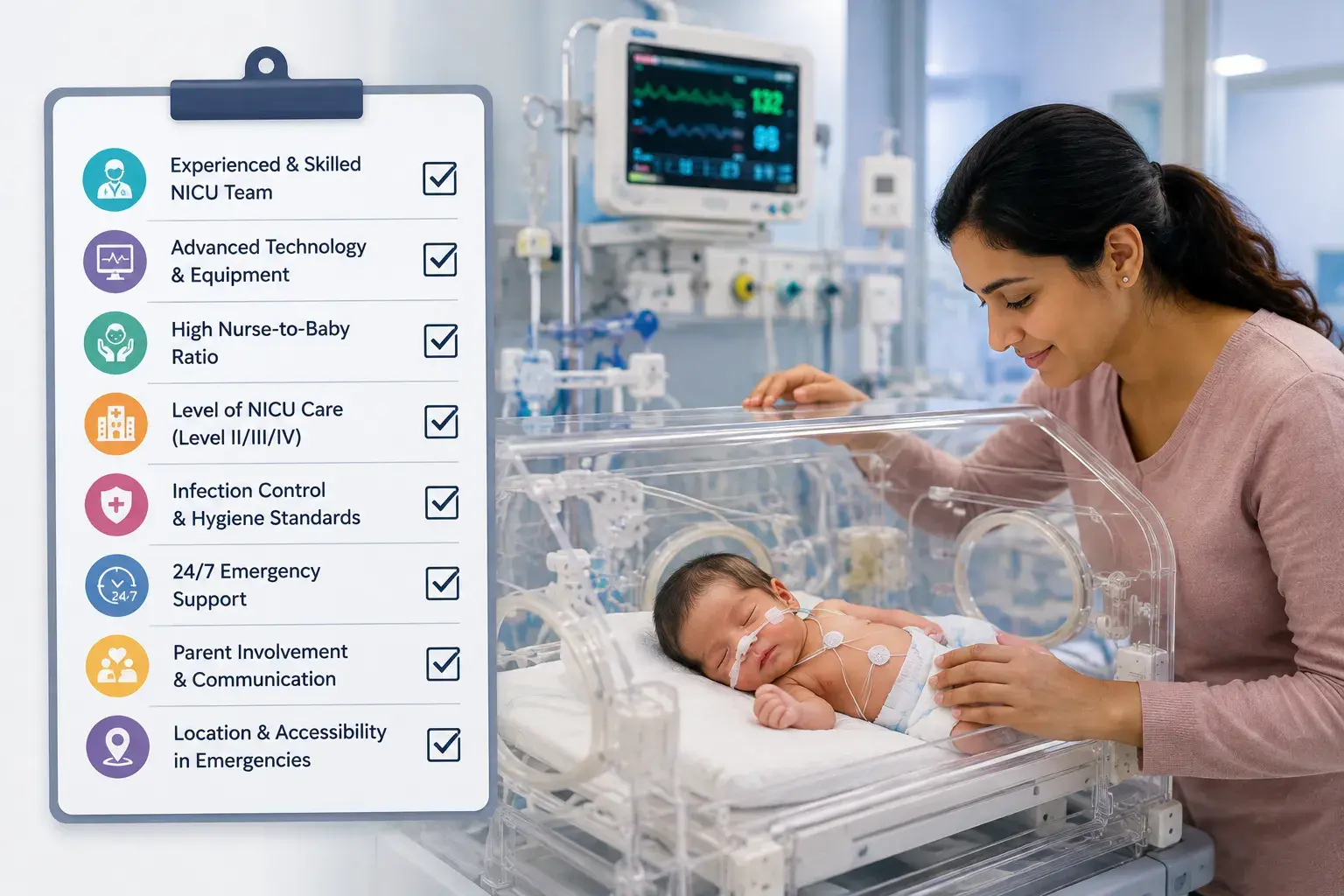
A parent's checklist for choosing a NICU hospital
When you visit or call, run through these points:
- Neonatologist availability – Is a newborn specialist on call 24 hours, not only a general paediatrician?
- Equipment on site – Look for incubators, warmers, ventilators, CPAP support and phototherapy for jaundice.
- Nurse-to-baby ratio – Sick newborns need close, consistent nursing, especially overnight.
- Hygiene and infection control – Ask about nursery cleaning routines and the visitor policy.
- Parent access – Can you stay close, hold your baby, and take part in kangaroo care and breastfeeding?
- Attached maternity unit – Delivering and recovering in the same place as the NICU avoids risky transfers.
One more thing that is easy to overlook: do the doctors explain your baby’s condition in plain language you actually understand? A team that answers your questions openly and patiently tells you a lot about how they treat families.
Why "NICU hospital near me" matters more than you think
Distance is not a small detail with newborns. If your baby needs urgent support, minutes count, and a long journey adds risk. Choosing a NICU hospital in Aurangabad close to home also means family can visit, mothers can recover nearby, and follow-up appointments are easier to keep.
Search convenience is nice. Real proximity to skilled neonatal care is what protects your baby.
Have Questions About NICU Facilities or Newborn Care?
Chat with our team on WhatsApp to learn more about our NICU, neonatal services and how we support mothers and babies under one roof.
Choosing a NICU hospital in Aurangabad
For families in Aurangabad (Chhatrapati Sambhajinagar) and the surrounding districts of Marathwada, the reassuring option is a maternity hospital that manages pregnancy, delivery and newborn care together. At Anandi Hospitals, the NICU and neonatal team works alongside the obstetrics unit, so high-risk pregnancies and the babies who need extra support stay under one coordinated team. That continuity matters most on the days you are least able to plan.
No parent wants to think about intensive care for their newborn. Looking into it early is not pessimism. It is how you make a calm, informed choice instead of a rushed one.
If you are expecting and want to understand your neonatal care options, talk to the team at Anandi Hospitals and ask to see how their NICU supports mother and baby together.
Frequently Asked Questions (FAQs)
1. When does a newborn need to be admitted to a NICU?
A baby may need NICU care if they are born premature, have a low birth weight, develop jaundice, struggle to breathe or feed, or face complications from a high-risk pregnancy. Many stays are short and simply give a fragile newborn steady, expert monitoring in the first hours or days.
2. What should I look for when choosing a NICU hospital in Aurangabad?
Check the level of neonatal care, whether a neonatologist is on call 24 hours, and the equipment on site such as incubators, ventilators, CPAP and phototherapy. Also ask about the nurse-to-baby ratio, infection control, parent access, and whether the NICU sits alongside an attached maternity unit.
3. What are the different levels of NICU care?
Neonatal care is usually grouped into levels. A basic nursery handles healthy newborns and minor observation, a special care unit supports premature babies who need help with breathing and feeding, and an intensive care unit manages very small or very sick infants, including those who need ventilator support. Ask the hospital which level they provide.
4. Why does choosing a NICU hospital near me matter?
With newborns, distance affects safety. If a baby needs urgent support, a long journey adds risk, so proximity to skilled neonatal care protects your baby. Being close to home also means family can visit, the mother can recover nearby, and follow-up appointments are easier to keep.
5. Is it better to deliver at a hospital that has its own NICU?
Yes, delivering where the NICU and maternity unit are under one roof avoids risky transfers and keeps mother and baby together. If your newborn needs extra support, a coordinated obstetrics and neonatal team can step in immediately, which matters most during high-risk pregnancies.