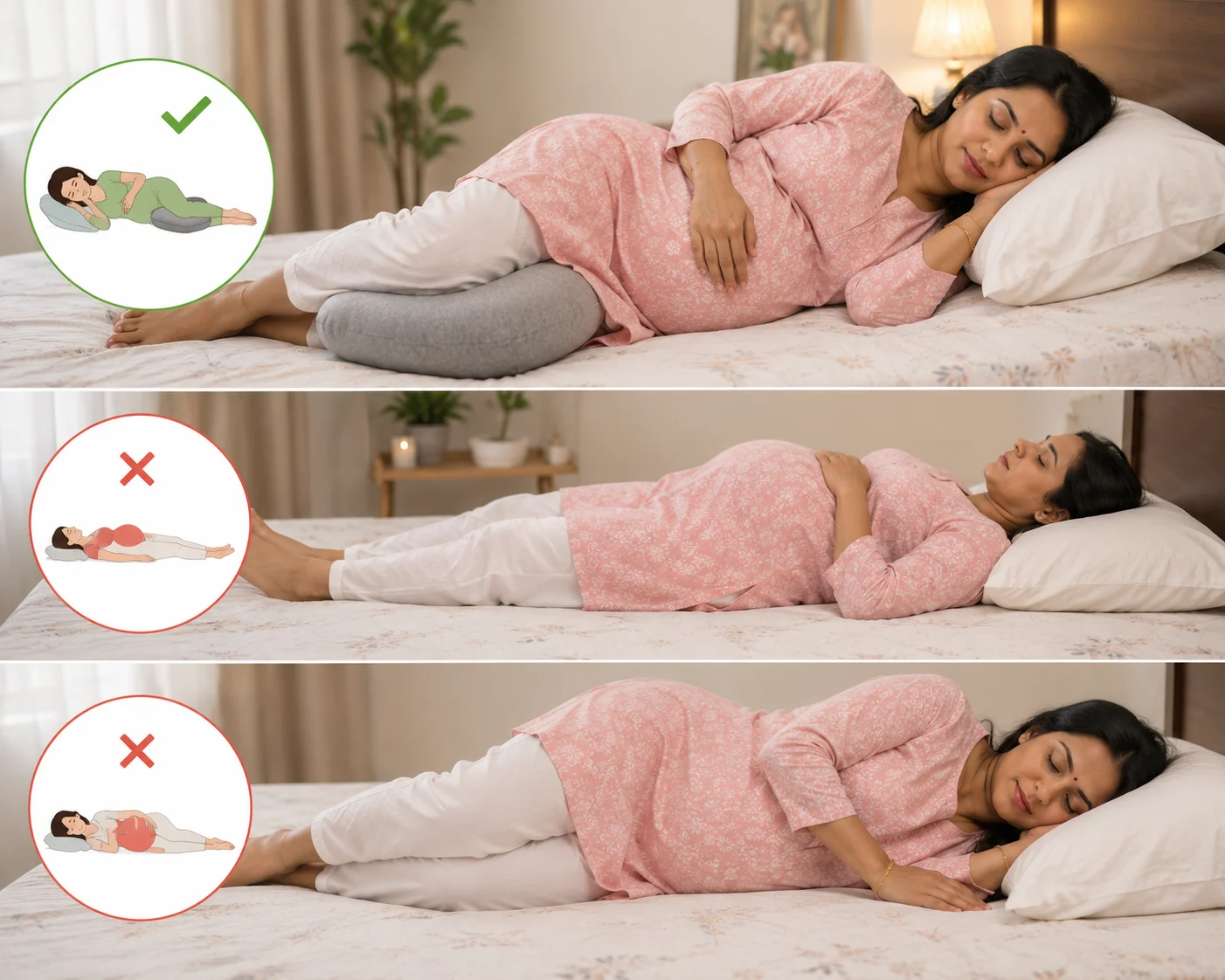
The best sleeping position in pregnancy is sleeping on your left side, often called the SOS (Sleep On Side) position. This posture improves blood flow from your heart to the baby, supports kidney function, and reduces swelling in your legs and feet. Doctors across India, including the obstetric team at Anandi Hospital, recommend the left-side position from the second trimester onwards because it takes pressure off the inferior vena cava, the large vein that carries blood back to your heart. Getting your sleep posture right is one of the simplest things you can do for a healthy pregnancy, yet it is something most expectant mothers do not think about until discomfort sets in.
Why Sleeping Position Matters During Pregnancy
As your baby grows, your body changes in ways that affect how you breathe, digest food, and circulate blood. By the second trimester, lying flat on your back can compress major blood vessels, which may cause dizziness, breathlessness, low blood pressure, and reduced oxygen supply to the baby. Sleeping on your stomach becomes physically impossible as the bump grows. This is why the best sleeping position during pregnancy is one that keeps your circulation strong and your spine aligned, while taking weight off your back and pelvis.
For Indian mothers who often sleep in joint family settings or share beds with toddlers, finding the right position can feel tricky. The good news is that small adjustments with pillows and a little planning can make a big difference.
The Left Side: Why It Works Best
The left-side position, known as SOS, is the gold standard for pregnancy sleep. Here is why doctors prefer it:
- Better blood flow: Your inferior vena cava runs along the right side of your spine. Lying on your left keeps this vein open and helps oxygen-rich blood reach the placenta.
- Reduced swelling: Your kidneys work more efficiently in this position, which helps flush out waste and reduces swelling in the hands, ankles, and feet, a common complaint in Indian summers.
- Eases back pain: Side-sleeping with a pillow between your knees relieves pressure on your lower back and hips.
- Supports digestion: It helps reduce acid reflux and heartburn, which are very common in the third trimester, especially after spicy meals.
If lying on your left side feels uncomfortable all night, switching to your right side occasionally is perfectly safe. The aim is to avoid long stretches on your back, not to stay frozen in one position.
A gentle reminder from Anandi Hospital: Every pregnancy is different. If you have specific conditions like placenta praevia, gestational hypertension, or twin pregnancy, our obstetricians can guide you on the safest sleep posture for your case. Book a consultation with our maternity team for personal advice.
Positions To Avoid
Back sleeping (supine position): After 20 weeks, sleeping flat on your back puts the full weight of your uterus on your spine, intestines, and major blood vessels. This can lead to backaches, haemorrhoids, breathing trouble, and a drop in blood pressure.
Stomach sleeping: This is fine in the first trimester but becomes unc
📖 People also read about:
If you wake up and find yourself on your back, do not panic. Simply roll over to your side and continue sleeping. Your body usually shifts on its own when something feels wrong.

How To Get Comfortable: Practical Tips For Indian Mothers
Sleep can feel like a luxury during pregnancy, especially in the third trimester. Here are some simple ways to make the best sleeping position in pregnancy actually work for you:
- Use a pillow between your knees. This keeps your hips aligned and reduces lower back strain. A regular cotton pillow works, or you can invest in a pregnancy pillow.
- Place a pillow under your bump. A small, soft pillow under your belly gives gentle support and prevents the dragging sensation many mothers feel.
- Try a wedge pillow behind your back. This stops you from rolling onto your back during the night.
- Sleep slightly propped up if you have acid reflux. Use an extra pillow under your head and shoulders to keep stomach acid down.
- Stay cool. Indian summers can disturb sleep. Use light cotton sheets, run a fan, and keep a bottle of water nearby.
- Stick to a routine. Sleep and wake at the same time daily. A warm shower or deep breathing before bed helps. Pairing this with safe pregnancy exercises during the day also eases night-time discomfort.
When To See A Doctor
If you are losing sleep regularly, snoring loudly, experiencing chest pain, severe swelling, or noticing reduced baby movement, please see your doctor. Sleep problems during pregnancy can sometimes point to conditions like sleep apnoea, anaemia, or gestational diabetes, all of which need attention.
The maternity team at Anandi Hospital sees expectant mothers from across the region and can help you manage discomfort with safe, evidence-based care. Whether it is your first pregnancy or your third, you do not
📖 People also read about:
Trimester-By-Trimester Sleep Guide
- First trimester (1 to 12 weeks): You can still sleep in any position. Listen to your body. Fatigue is high during this stage, so rest whenever you can.
- Second trimester (13 to 26 weeks): Start training yourself to sleep on the left side. Add pillows for support.
- Third trimester (27 weeks onwards): Stick to the left side as much as possible. Use multiple pillows, sleep in shorter stretches if needed, and nap during the day.
Final Thoughts
The best sleeping position during pregnancy is not about being perfect. It is about giving your body and your baby the best support possible. Sleeping on your left side, with the right pillow setup, can ease discomfort, improve circulation, and help you wake up feeling more rested. Be patient with yourself, listen to what your body is telling you, and ask for help when you need it.
Book Your Pregnancy Care Appointment Today
Pregnancy is a journey that deserves expert care at every step. The obstetrics and gynaecology team at Anandi Hospital offers complete maternity support, from antenatal check-ups to safe delivery and postnatal care.
💡 Need help?
We offer professional family planning services to help you achieve your goals.

Call Anandi Hospital now or book your appointment online to start your pregnancy journey with doctors who care.
Frequently Asked Questions
1. Is it safe to sleep on the right side during pregnancy?
Yes, sleeping on the right side is safe. The left side is preferred for better blood flow, but switching to the right occasionally to stay comfortable is perfectly fine.
2. What if I wake up on my back during pregnancy?
Do not worry. Simply turn back to your side and continue sleeping. Your body usually shifts naturally if something feels off.
3. Can I use a pregnancy pillow from the first trimester?
Yes, you can start using one whenever you find it comfortable. Many mothers begin in the second trimester when the bump starts to grow.
4. Why does my back hurt when I sleep during pregnancy?
Back pain is common due to your changing posture, weight gain, and hormonal shifts. Sleeping on your left side with a pillow between your knees usually helps.
5. How many hours of sleep do I need during pregnancy?
Most expectant mothers need around 7 to 9 hours of sleep, plus a short nap during the day if possible.
6. When should I consult a doctor about my sleep issues?
If you have severe snoring, breathing trouble, chest pain, or reduced baby movement, contact your doctor right away. The team at Anandi Hospital is always available to guide you.