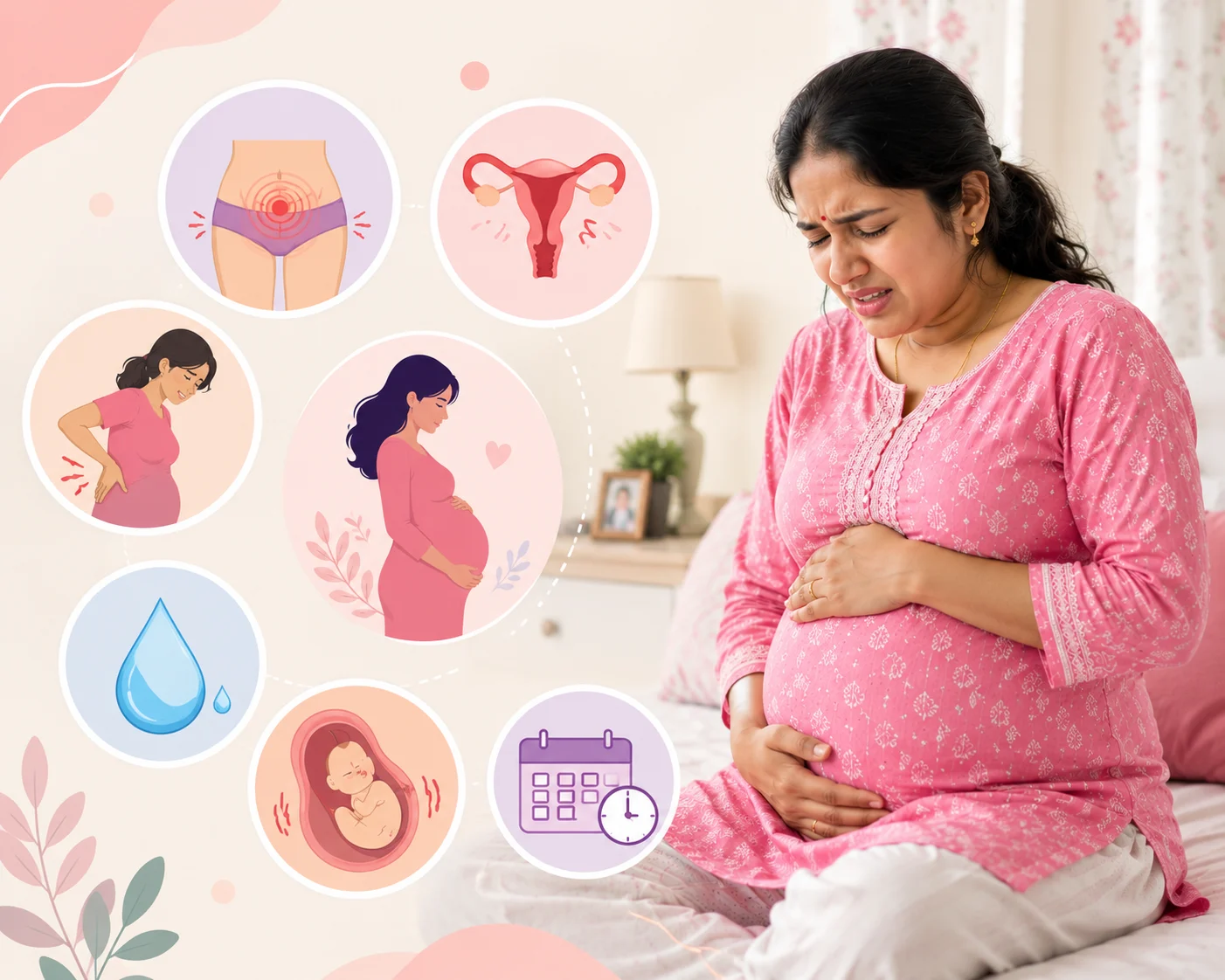
The most common signs of labour pain include strong and regular contractions that grow closer together, lower back pain that radiates to the abdomen, a “show” of blood-tinged mucus, water breaking, and pressure in the pelvis. These signs of labour pain usually appear when your body is ready for childbirth, typically between 37 and 42 weeks of pregnancy. Recognising the sign of true labour pain early helps expectant mothers and their families prepare for a safe delivery, and the team at Anandi Hospital is always ready to guide you through this beautiful journey.
Understanding True Labour Pain
Pregnancy is a wonderful experience, but the last few weeks can feel uncertain, especially for first-time mothers. Many women in India often confuse false labour with the real thing, which is why understanding the signs of labour pain becomes so important. True labour pain is your body’s way of telling you that your baby is ready to enter the world.
The sign of true labour pain is different from the practice contractions known as Braxton Hicks. While false labour can cause discomfort, real labour follows a pattern. The contractions become stronger, longer, and closer together with time, no matter what position you take or how much you rest.
Key Signs Of Labour Pain Every Mother Should Know
1. Regular and Strong Contractions
The most reliable sign of true labour pain is regular uterine contractions. These contractions usually start mild but gradually become more intense. They follow a clear rhythm, often beginning at intervals of 20 to 30 minutes and slowly reducing to 5 minutes or less.
You may feel a tightening sensation across your abdomen, similar to severe menstrual cramps. Walking, changing positions, or resting will not make them stop. If your contractions last around 45 to 60 seconds and come every 5 minutes for an hour, it is time to head to the hospital.
2. Lower Back Pain and Abdominal Cramping
Many Indian women describe labour pain as a dull, constant ache in the lower back that moves towards the front of the abdomen. This back pain can come and go with contractions. It often feels heavier than usual menstrual discomfort and may be accompanied by pressure in the thighs.
3. The “Show” or Mucus Plug Discharge
During pregnancy, a thick mucus plug seals the cervix to protect the baby. As labour approaches, this plug comes out, sometimes streaked with pink or brown blood. This is called the “sho
📖 People also read about:
4. Water Breaking
The breaking of water, also known as the rupture of membranes, is a clear sign that labour has started or will start soon. You may feel a sudden gush of fluid or a slow trickle. The fluid is usually clear or pale yellow. If your water breaks, contact your doctor right away, even if contractions have not yet started.

If you notice any of these changes, the experienced maternity team contact with Anandi Hospital is available round the clock to assess your condition and offer the right guidance.
5. Pelvic Pressure and Baby “Dropping”
A few days or weeks before labour, the baby moves lower into the pelvis. This is called “lightening” and helps you breathe more easily. However, it also increases pressure on the bladder, leading to frequent urination. Some women feel a heaviness in the pelvic area, which is another sign of true labour pain approaching.
6. Nausea, Diarrhoea, or Loss of Appetite
Just before labour, your body releases hormones that prepare the muscles for delivery. These hormones can also affect digestion, causing loose motions, m
📖 People also read about:
How to Tell the Difference Between False and True Labour
| Aspect | False Labour | True Labour |
| Contractions | Irregular, do not get closer | Regular, get closer over time |
| Strength | Stay the same or weaken | Grow stronger and longer |
| Pain location | Mostly front of abdomen | Starts in back, moves to front |
| Effect of rest | Stops with rest or movement | Continues regardless of activity |
Knowing these differences helps you avoid unnecessary hospital trips while making sure you do not delay genuine labour.
What to Do When You Notice Signs Of Labour Pain
When you start feeling the signs of labour pain, stay calm and follow a simple plan:
- Time your contractions using a phone or watch
- Keep your hospital bag ready with essentials
- Call your gynaecologist or hospital
- Avoid eating heavy meals; sip on water or coconut water
- Practise deep breathing to stay relaxed
The maternity specialists at Anandi Hospital recommend that mothers make a birth plan well in advance. This
💡 Need help?
We offer professional family planning services to help you achieve your goals.
When to Go to the Hospital
You should head to the hospital when:
- Contractions are 5 minutes apart, each lasting about a minute, for at least an hour
- Your water has broken
- You notice heavy bleeding
- The baby’s movements have reduced significantly
- You feel severe headache, blurred vision, or sudden swelling
Why Choose Anandi Hospital for Your Delivery
Anandi Hospital offers complete maternity care with skilled obstetricians, neonatologists, and trained nursing staff. From your first antenatal visit to post-delivery recovery, every step is handled with care, safety, and respect for Indian family traditions.

Book your maternity consultation at Anandi Hospital today and give your baby the safest start in life. Call us now or visit our hospital to plan a healthy and happy delivery.
Frequently Asked Questions
Q1. How long does labour pain usually last for first-time mothers?
For first-time mothers in India, labour can last between 12 to 18 hours on average. Each woman’s experience is different, and the duration depends on factors like the baby’s position and the mother’s health.
Q2. Can I eat or drink during early labour?
Light snacks like fruits, toast, or coconut water are usually fine during early labour. However, once active labour begins, doctors often advise against heavy meals to avoid complications during delivery.
Q3. Is back pain always a sign of labour?
Not always, but persistent and rhythmic lower back pain that comes in waves is often a sign of true labour pain, especially when combined with abdominal tightening.
Q4. What should I do if my water breaks but contractions have not started?
Contact your doctor immediately. You should head to the hospital even if you are not feeling contractions, as the risk of infection increases once the water breaks.
Q5. Are Braxton Hicks contractions painful?
Braxton Hicks contractions are usually mild and feel like a tightening of the abdomen. They are irregular and do not increase in intensity, which makes them different from real labour pains.